Humanoid robots, physical AI and real-world operations. We attended the inaugural PROTO ROBOT conference
On Friday 23 October, the first PROTO ROBOT event – a new series of events focusing on robotics and so-called physical AI – took place at the Pracovna co-working centre in Žižkov, Prague. The event brought together developers, technology enthusiasts and people looking for practical applications for robots. Representing TRITON IT were David Trojan, an analyst, and Marek Rost, the CTO. The event was also supported by the Czech Artificial Intelligence Association (ČAUI), of which we are a member.

The programme featured live demonstrations of robots, presentations of technology projects, and insights into their deployment and maintenance. It was also important to assess how far individual solutions are from actual commercial use and what obstacles their developers are facing.
A dancing humanoid and a robot you can have a chat with
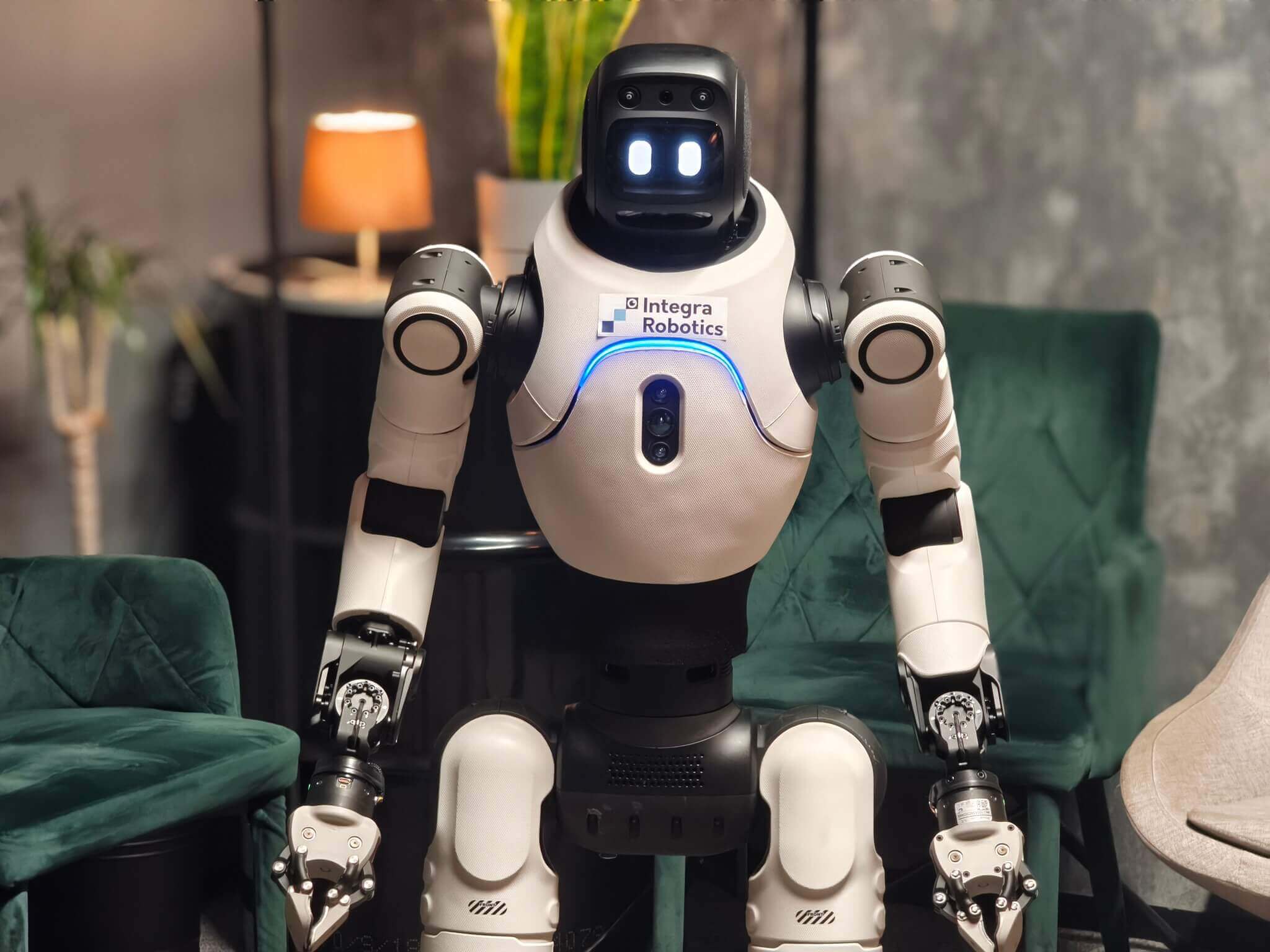
The opening part of the event was devoted to demonstrations. Participants were able to take a close look at several robotic devices and talk to their creators. Naturally, the humanoid robot brought by the Prague-based start-up Integra Robotics attracted the most attention. During the event, the robot performed a short dance routine. The technology itself is used to develop and test advanced manipulation applications, such as bin picking.
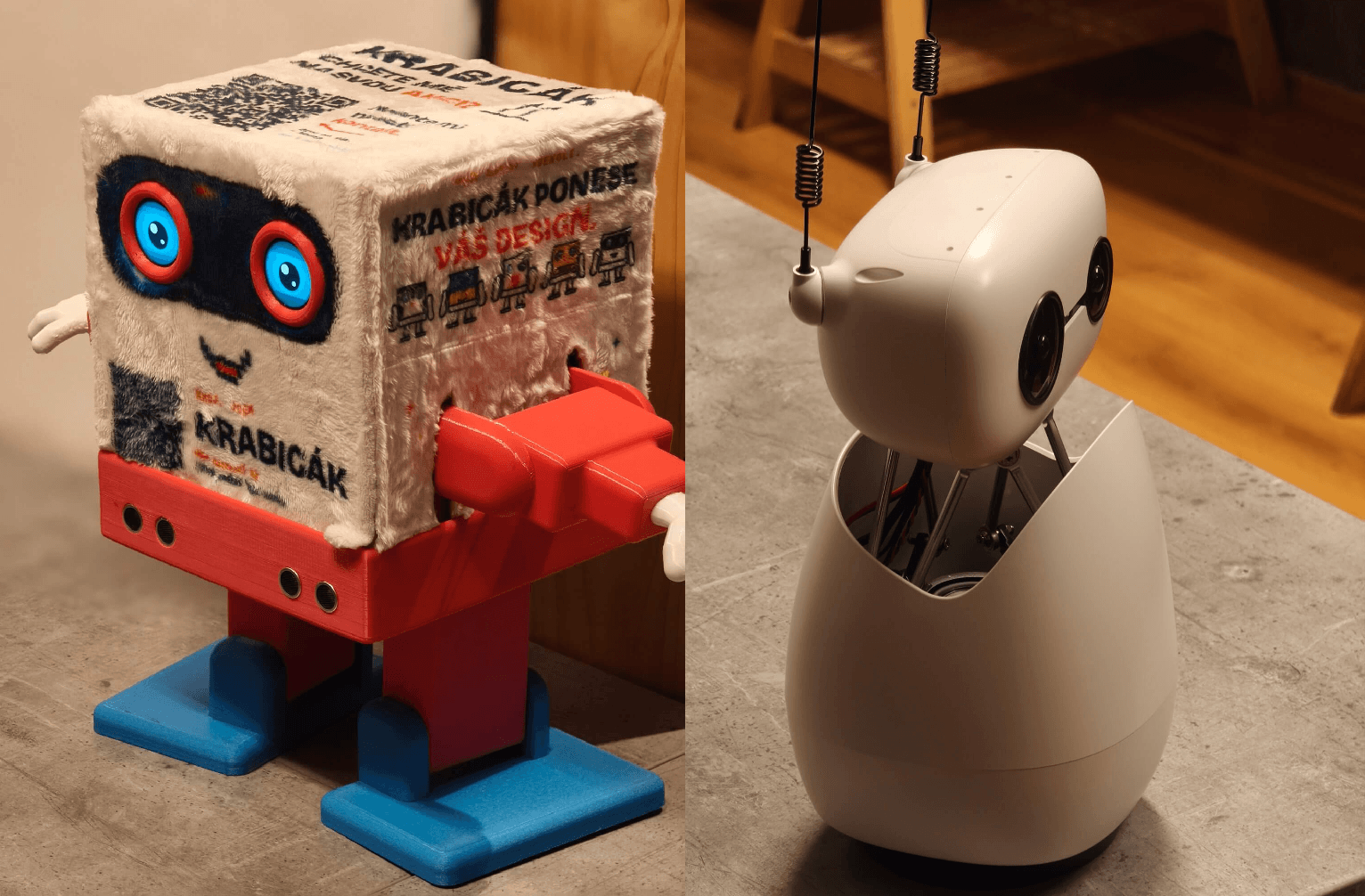
Reachy Mini, a desktop robot developed by Pollen Robotics – a company characterised, amongst other things, by its open-source approach to robotics and artificial intelligence – offered an interesting interactive experience: the company openly publishes its models on the Hugging Face platform. One of the robot’s key features is its ability to communicate vocally and interact with the user. It is an open robotic platform that allows experimentation with the integration of physical devices and artificial intelligence. It is precisely such projects that demonstrate how language models can gradually move from the digital realm into the physical world.
Integra Robotics: humanoid robotics is finding its way into businesses
One of the keynote speakers was Lukáš Vítek from Integra Robotics. The company specialises as an integrator of modern industrial robotics, focusing on Physical AI, flexible manipulation and robotic vision. It always selects the hardware platform (including both humanoid and standard industrial robots from overseas manufacturers) according to the specific application and the customer’s needs.
From a technical perspective, we were intrigued by the combination of deterministic methods and approaches based on VLA (Vision-Language-Action) models. These link visual perception, linguistic instructions and the execution of actions. The robot is thus able to combine the precision of algorithmic movement with the flexibility of VLA models. As a result, it achieves greater reliability when performing tasks and, at the same time, is able to gradually learn to respond to the situations it observes.
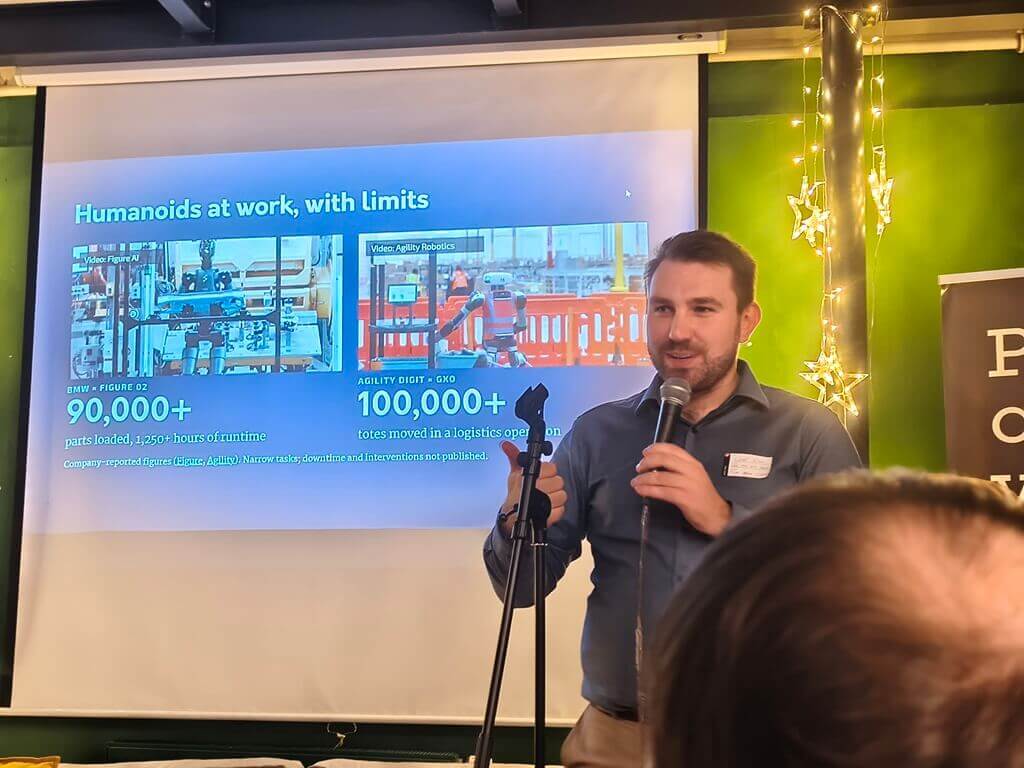
The presentation highlighted, for example, the principle of using CCTV footage of everyday human activities, such as opening bottles. Such data can be used to train models which then control the robot’s movements. The aim is to teach machines to handle objects and perform tasks for which it would otherwise be necessary to program each individual situation in a complex manner.
The potential applications are wide-ranging: from intralogistics and object handling – known as ‘bin picking’ – to routine tasks in manufacturing and other operations where companies are struggling to find staff.
The challenging path to the industrial integration of Physical AI
At the same time, however, an important point has come to light – one that is sometimes overlooked in presentations by tech start-ups: when establishing a new tech market, the path from an interesting concept to a fully functioning business model is a rather thorny one.
Integra Robotics is already carrying out industrial integration projects for paying customers. It plans to roll out its first live deployment of a humanoid robotic application in a customer’s live operational environment in January 2027. This is a significant development that demonstrates how theory is gradually being translated into real-world industrial practice.
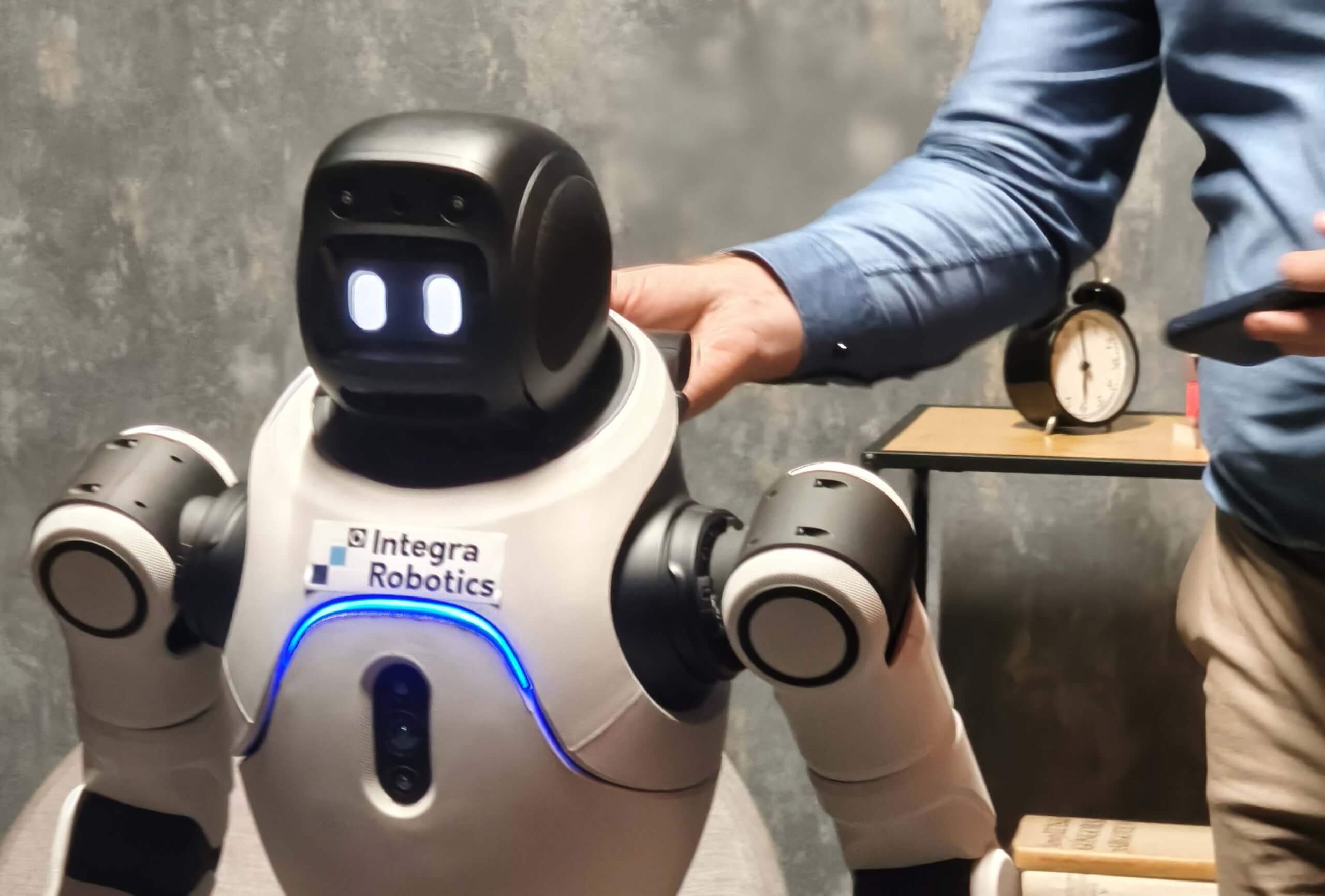
A telling example was a business requirement the company was addressing for a delicatessen. The concept involved a robot that would slice salami, pack it and, at the same time, interact with customers. On paper, this looks like the ideal task for a versatile humanoid assistant. At present, however, such a scenario comes up against limitations in terms of manipulation, reliability and hygiene requirements in the food industry.
 With humanoid robots, it is necessary to separate what they can demonstrate in controlled conditions from what they can handle reliably twelve hours a day in real-world operations. It is precisely this second part that determines whether a technological demonstration becomes a truly usable solution.

That does not mean that humanoid robotics has no future. It means that the path from an impressive demonstration to economically viable deployment involves overcoming a number of technical, operational and commercial hurdles.
Robotservice: the work doesn’t end with the robot
Tomáš Konečný from Robotservice offered another, equally important perspective. The company specialises in the servicing and maintenance of robotic equipment already in use in everyday operations. Examples included cleaning robots in retail chains, equipment used in the catering industry, and machines deployed in manufacturing and construction firms.
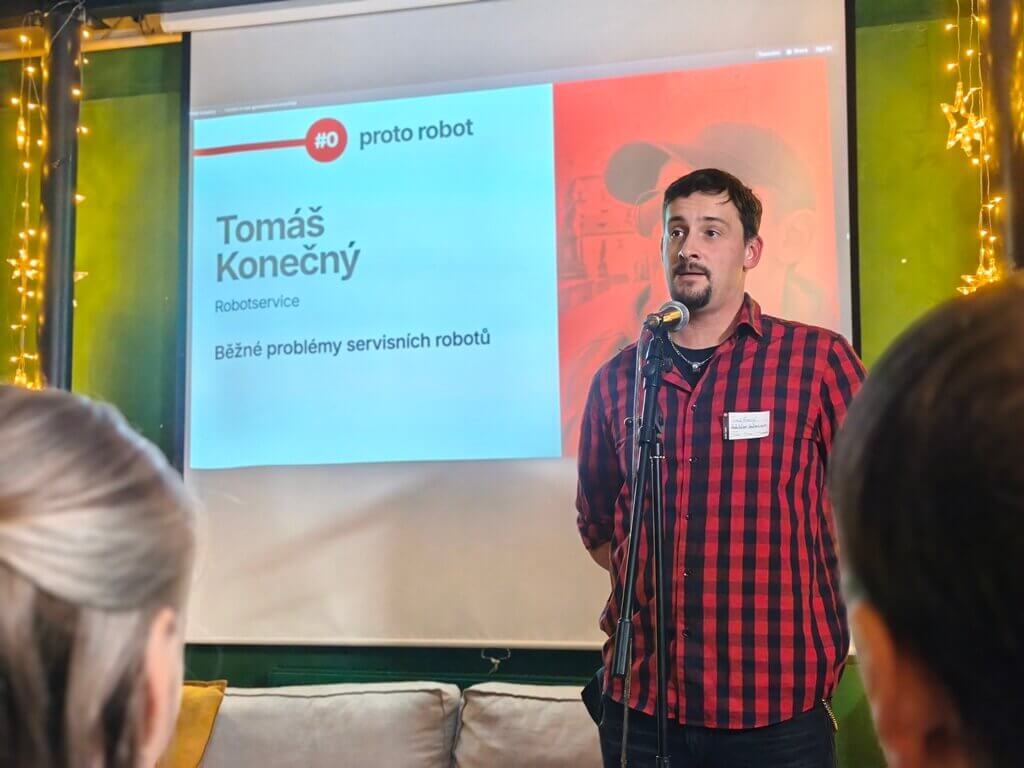
Unlike presentations focusing on the future of robotics, this offered a perspective drawn from day-to-day practice. Tomáš Konečný described the faults that service technicians deal with, how remote interventions are carried out, and when it is necessary to go directly to the site. The operators also play a significant role in this. A robot may be technically capable, but if staff do not look after it, neglect its maintenance or handle it incorrectly, its reliability will quickly decline.
The presentation was not a technical analysis down to the smallest detail, but it did make an important point: the project does not end with the deployment of the robot. The equipment requires maintenance, diagnostics, readily available spare parts and people who know how to operate it.
From the perspective of companies considering automation, this is a crucial part of the economic decision-making process. It is not enough simply to compare the purchase price of a robot with the cost of human labour. The total costs must also include maintenance, downtime, operator training and the complexity of integrating the robot into existing processes.
THAT’S WHY ROBOT #0: a brilliant showcase of AI robotics
The first PROTO ROBOT event took place in a pleasant atmosphere. The organisation ran smoothly, the venue offered plenty of opportunities for informal conversations, and, according to our estimates, around a hundred participants attended the event. A significant proportion of the audience consisted of young students from the Czech Technical University in Prague, which is a positive sign for the development of robotics and technical disciplines.

The very format of short presentations and live demonstrations makes sense. It allows participants to meet the people who actually develop, integrate or service Physical AI robots, and to compare their experiences with the expectations of other attendees. As this was the inaugural year, the event was not without its minor teething problems: for example, with some robots, it was not possible to speak to their creators and thus gain a deeper insight into the stage of development the projects were at.
We evaluate the PROTO ROBOT zero meeting positively. It is clear that an active community is forming around physical AI and that concrete ways are being sought to get robots out of laboratories and into companies. At the same time, it is fair to say that many projects are still at the beginning. The greatest value will come from those that, alongside technological capabilities, can also show real results, operational reliability, and economic benefits.
Why we will continue to monitor the development of physical AI
Physical AI is an area that merits attention not only from the perspective of manufacturing and logistics. Its development illustrates how artificial intelligence is gradually shifting from working with information to influencing the physical world.
At TRITON IT, we have long been exploring how to utilise new technologies in specific business processes. When it comes to software automation, the same principle applies as with robotics: a technological innovation in itself does not yet constitute a result. What matters is whether it can solve a real problem, fit into the existing environment and deliver measurable value.
The first PROTO ROBOT event offered us a useful insight into a sector that has great potential, but also faces a number of unresolved challenges. We will therefore be monitoring how individual projects progress from initial demonstrations to practical deployment. And we look forward to future meetings, where we will be able to compare today’s visions with what robots are actually capable of.
Do you want to automate routine tasks in your company?
Related articles
 About us
How is artificial intelligence used in video production? What are MCP servers and how do they help developers? And what if you could control...
About us
At TRITON IT, we have long been giving opportunities to secondary school students who want to experience what it’s like to work in a real IT...
About us
At TRITON IT, we help companies build their own digital vertical. We specialise in its key areas, ranging from hardware management through software...