We are expanding our development infrastructure: from a bridge to the Apple ecosystem to on-premises AI
Development at TRITON IT has long been based on a Linux environment and infrastructure, which we build to handle the entire lifecycle of digital projects – from data through websites to applications. In practice, we have long found that a single technology stack is no longer sufficient. Companies wishing to effectively cover the entire lifecycle of digital projects must work with managed infrastructure heterogeneity, i.e. combine multiple environments according to the specific use case.
In our case, this need became apparent in two specific areas:
- App development for the Apple ecosystem
- demonstrations of solutions incorporating local AI directly during client meetings
Each of them has different technical and security requirements, so they cannot be effectively managed using a single, universal environment. We have therefore addressed both of these needs by expanding our infrastructure with two new machines: the Mac mini M4 and the Dream Machines RX5080-18EU26.
The Apple ecosystem with the Mac mini M4
In order to develop iOS and macOS apps effectively, we need a physical Apple machine. The tools for building, signing and publishing apps are tied to macOS and native execution. Previously, we addressed this situation through virtualisation. However, in practice, this runs into issues with performance, stability and the limitations of the virtualisation system itself. We needed a machine on which macOS runs natively and which also has sufficient performance for building applications.
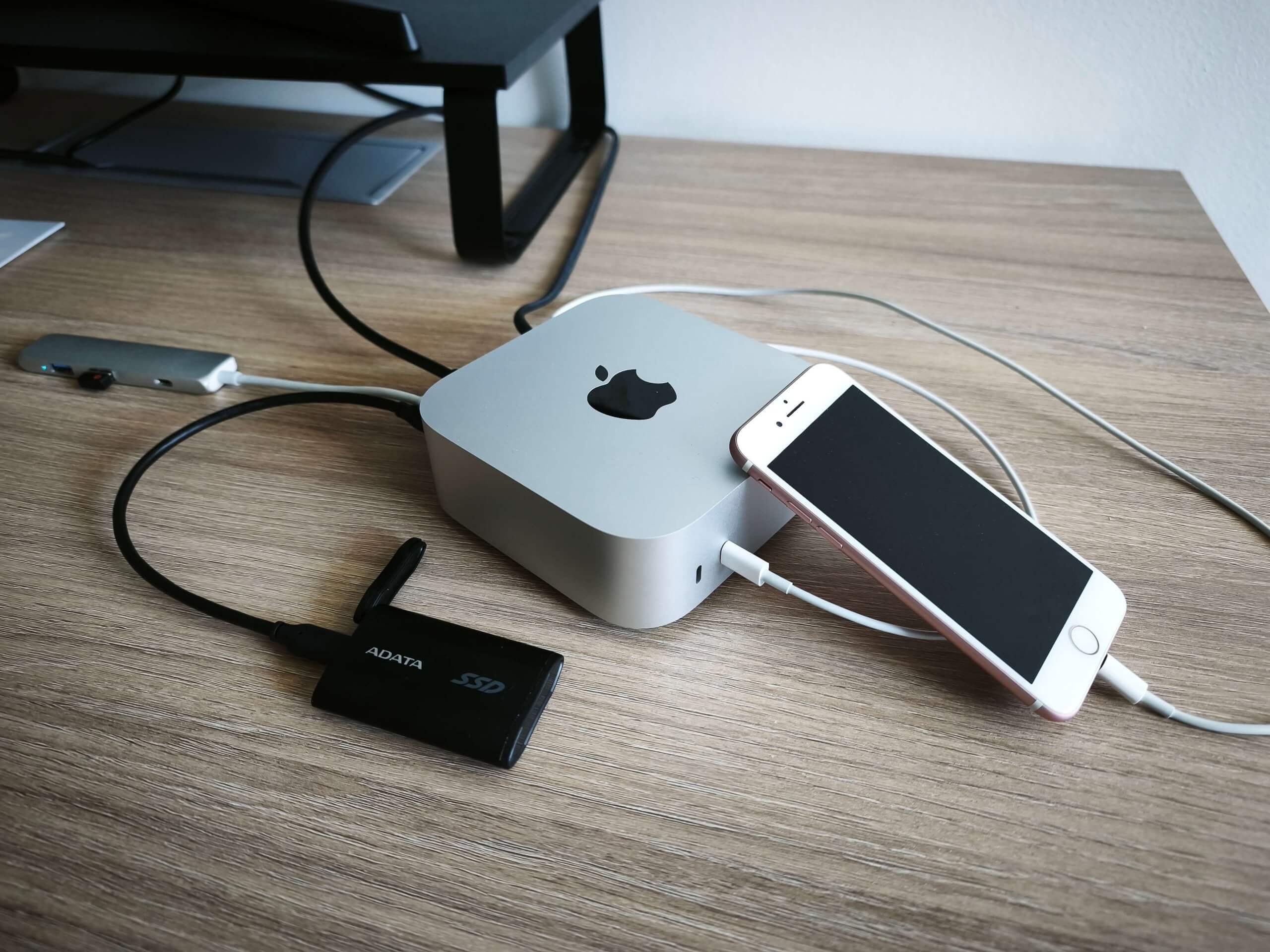
Why the Mac mini?
The Mac mini M4 is a pragmatic choice in this respect. It is built on the new generation of Apple Silicon chips (M4), which means high performance, excellent energy efficiency and, above all, a compact design that doesn’t require a dedicated workspace.
How we use the Mac mini
The Mac mini serves as a shared development hub for our development team. Our primary tool is Xcode, the official development environment for Apple platforms. It is used for the actual development and building of applications, as well as for ongoing testing and preparation for publication on the App Store. We access this machine via remote desktop. This means that a developer connects from their own device (typically running Linux) and works with the Mac as if they were sitting right in front of it.
We have set up our connection to the infrastructure using a reverse tunnel via Cloudflare. This ensures that access is controlled and secure, and the machine remains within our infrastructure
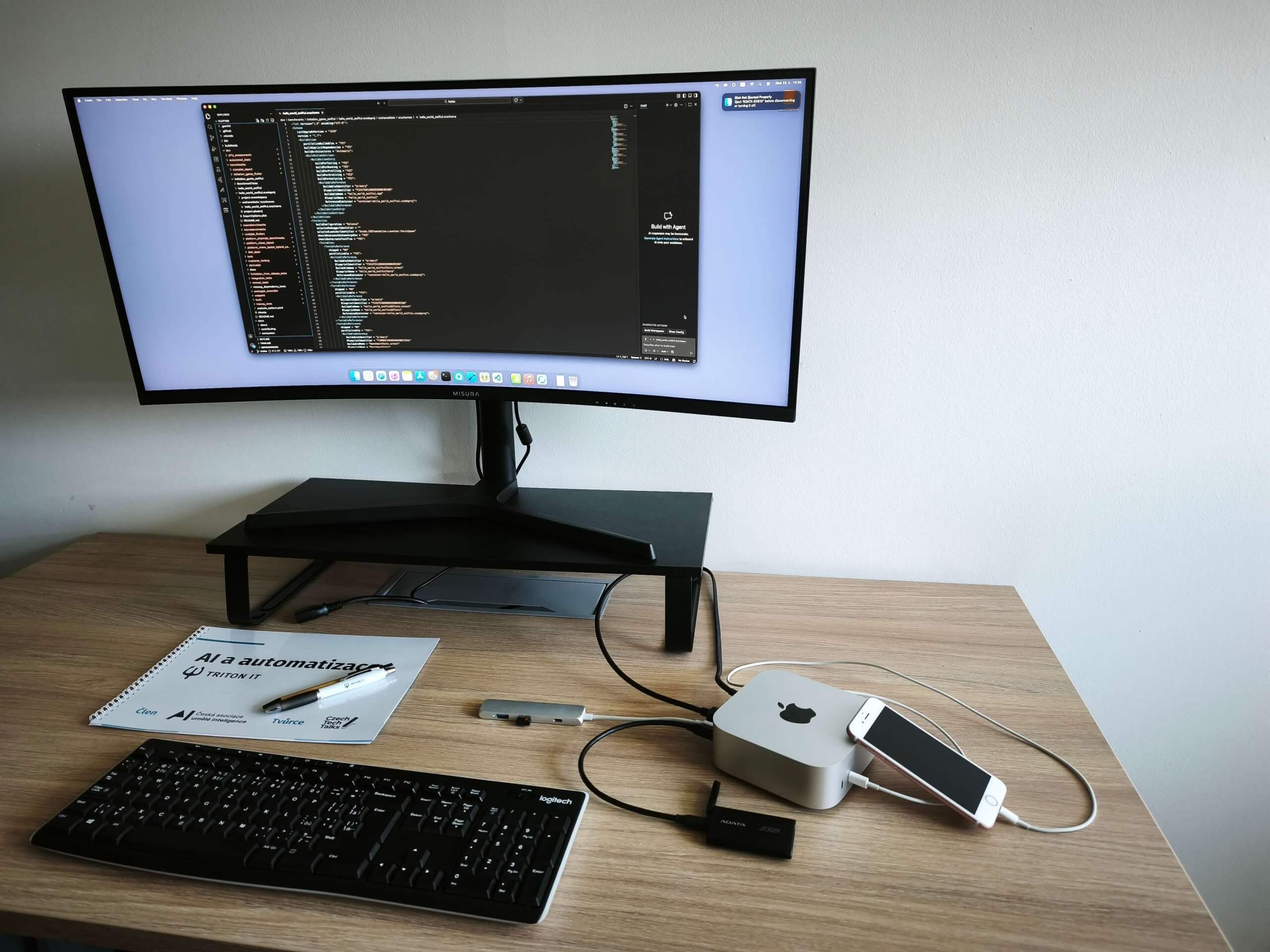
As well as app development, we have also started using the Mac mini for internal AI tools. Specifically, it runs the translation version of the Google Gemma model. We use this as an alternative to DeepL, for example when creating different language versions of our website.
Mobile AI performance thanks to the Dream Machines RX5080
The second machine tackles a different challenge. Whilst the Mac mini is an integral part of the infrastructure, the Dream Machines RX5080-18EU26, by contrast, is a portable device.
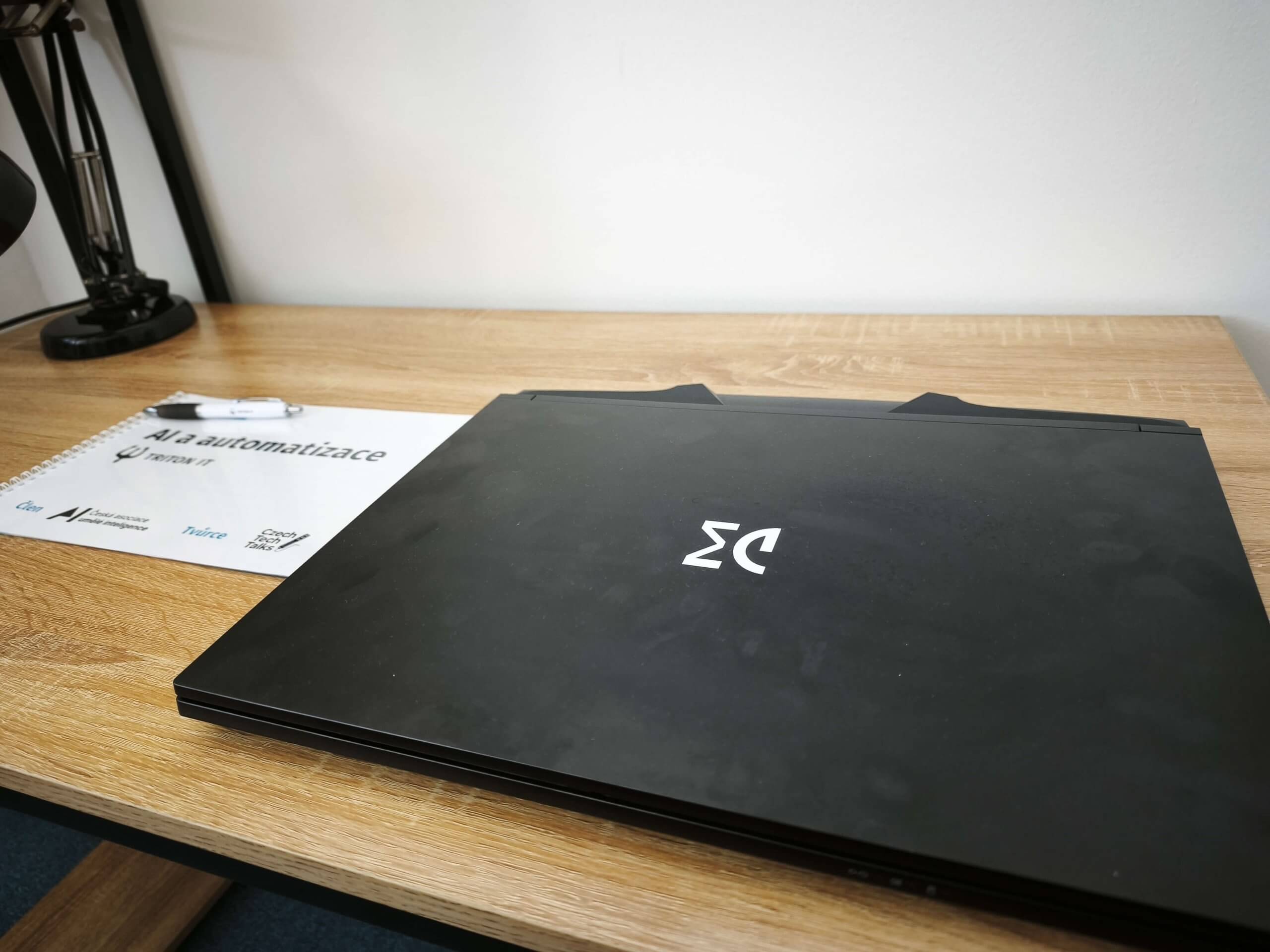
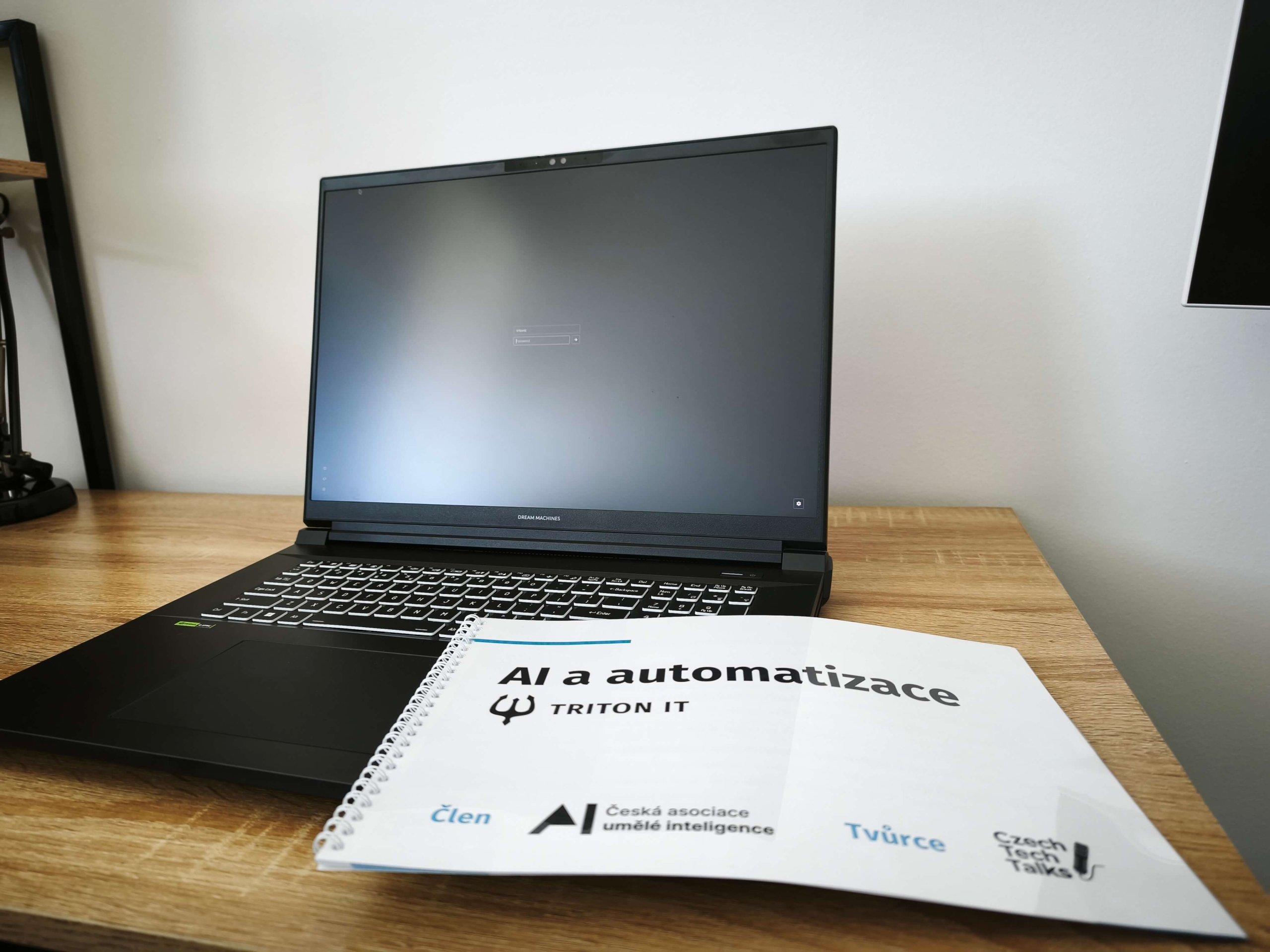
This laptop is designed as a high-performance workstation in a portable form factor. Key features include the NVIDIA RTX 5080 graphics card (16 GB GDDR7) and the performance delivered by 32 GB of RAM (DDR5). It is precisely thanks to this powerful graphics chip from NVIDIA – which has recently been in short supply not only on the Czech market but also globally – that we are able to run local AI models.
Why we bought it
We are increasingly dealing with situations where clients do not want to (or cannot) use public AI services. The reasons for this include the transfer of sensitive data, internal documents, legislation or the company’s internal security policy. At the same time, however, clients want to see what AI can do during meetings – ideally using their own data and in an environment that resembles their infrastructure. To be able to quickly demonstrate proof-of-concept solutions, we needed hardware that works locally and instantly. After thorough research, we opted for a machine from the Polish manufacturer Dream Machines.
How we use the RX5080-18EU26 in practice
We use the Dream Machines RX5080-18EU26 as a mobile AI lab. During meetings with clients, we can use it to demonstrate specific scenarios directly, such as AI assistants working with internal data, working with embeddings, transcribing audio using Whisper, or deploying smaller LLM models into business processes.
Both machines cater to different needs, but fit within the same framework. The Mac mini allows us to extend our development into the Apple ecosystem and keep the entire process under control. The AI laptop allows us to bring the technology directly to the client and work with it in a real-world environment.
Both machines address different needs, but they fit within the same framework. This is not about specific hardware, but about their role within the infrastructure.
For us, the Mac mini acts as a bridge between our primarily Linux-based environment and the world of Apple platforms. It allows us to keep most of our development within a single stack, whilst at the same time providing us with controlled, native access to the ecosystem where this is required.
The AI laptop from Dream Machines, on the other hand, acts as a mobile extension of the infrastructure towards the client. It allows computing power and models to be transferred directly into their environment, enabling them to work with these without the compromises associated with, for example, cloud-based solutions.
Do you want to automate business processes or build a mobile app (not just) for iOS?
Related articles
 Development
An address entered in an online form is not just a piece of information that a customer fills in once. An online shop needs it to deliver an...
 About us
How is artificial intelligence used in video production? What are MCP servers and how do they help developers? And what if you could control...
 Content
ACOND is one of the leading Czech manufacturers of heat pumps and has been operating on the market since 1998. The development, testing and...