An internship at TRITON IT: two weeks that gave me an insight into the reality of software development
At TRITON IT, we have long been giving opportunities to secondary school students who want to experience what it’s like to work in a real IT environment. This is not a formal visit or a chance to observe work from a distance, but rather an opportunity to be actively involved in the projects, processes and decision-making that form part of a development team’s day-to-day work.
Two students, Miroslav Šimánek from the Secondary Technical School in Jihlava and Ondřej Micka from the Secondary Technical School of Electrical Engineering in Ječná, recently completed a fortnight-long work placement with us. Following the end of their placement, they are also staying on with the team as part of a long-term work experience scheme.
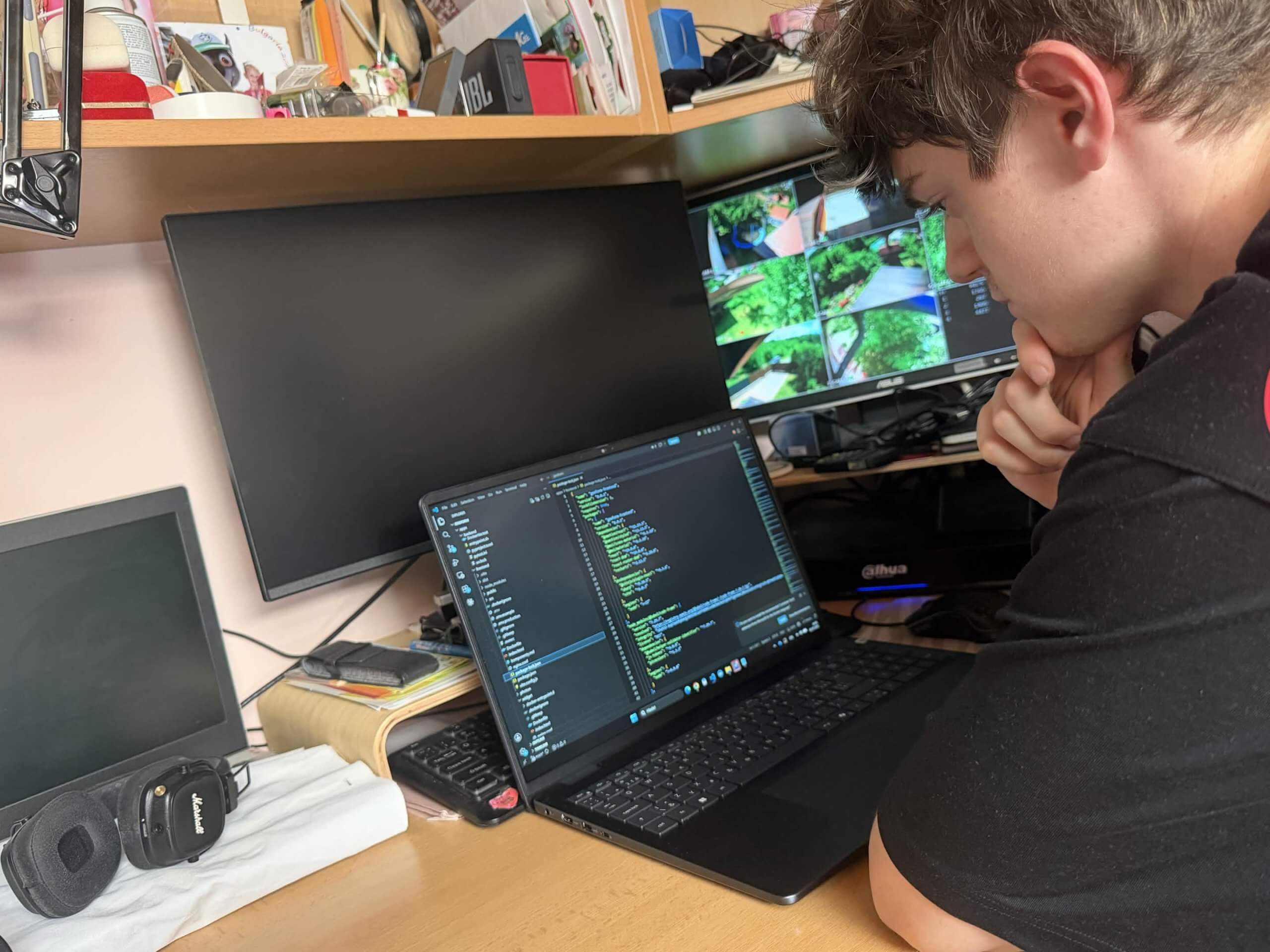
Fig. 1: Intern Miroslav Šimánek working on the SwiftFill project.
My first taste of the reality of working in an IT company
The first few days of the work placement were spent getting to know the company environment, working methods and the fundamental principles underpinning modern development and project management – how project briefs are drawn up, how projects are planned, and how the various roles within the team interlink.
A large part of the introduction was also devoted to working with tools that are now standard practice in effective development. The students were introduced to the project planning process, the basics of using tools to streamline communication, and how AI tools are utilised as part of day-to-day development work, rather than as an external add-on. At the same time, they gained first-hand experience of onboarding and reporting their work using our HNexus tool.
Fig. 2: Before the interns could start writing their first lines of code, the entire project had to be thoroughly planned with our CTO, Marek Rost.
During the introduction to the work placement, the students also had the opportunity to try their hand at project management using Sequentia PM, the tool we use for planning and managing development. It is a minimalist project management tool, which makes the entire project clear, version-controlled and easy to read for both developers and AI assistants. Instead of databases or cloud services, the entire project is represented by a file structure, which helped the students to better understand how the individual stages of development – from the brief through the backlog to the actual implementation – are interconnected.
“Right from the very first few days, I realised I’d been wrong to think that IT was just about mindlessly writing code. It was only then that I realised just how much work has to be done before the very first line of code is even written.”
Miroslav Šimánek, stážista
Involvement in a real-world project: Swiftfill
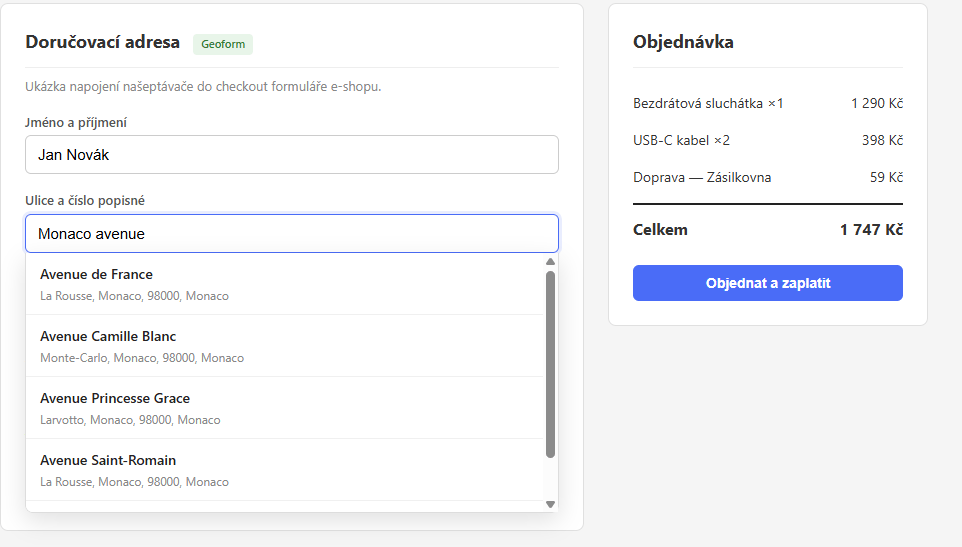
Unlike typical student work placements, the training was not detached from real-world development. Ondra and Mirek were directly involved in the development of our Swiftfill project, which is an API designed for web and e-shop developers that acts as an autocomplete and address validator in forms.
Fig. 3: Swiftfill is a project developed by our interns, who took it from the planning stage to production deployment in just two weeks.
Swiftfill aims to simplify the process of entering address details and reduce the error rate, which in practice leads to undelivered parcels and unnecessary costs. The students were involved in both the design and implementation of parts of the system and worked on integrating the front-end and back-end logic. Their work also involved understanding how the individual layers of the application interact in real-world operation and the importance of data consistency and a well-structured API.
Fig. 4: SwiftFill acts as a suggestion tool for verified address details for online shops.
Technical section: Git, front-end development and the basics of DevOps
The next phase of the work placement focused on technical implementation and working with tools that are standard in modern software development. The students worked with GitLab, where they practised creating repositories, managing code versioning and applying the basic principles of team collaboration in development. They then moved on to designing front-end architecture, creating components and modifying the existing landing page.
In the more advanced part of the work placement, they also covered topics that go well beyond the basic school curriculum. They worked with Docker, familiarised themselves with Linux and dealt with the deployment of SSH/CI keys. The final part of the work placement also included an introduction to deployment automation and the theory behind Ansible.
“Sometimes it all made my head spin, and I had to spend a lot of time studying the documentation on my own. But that feeling when things start to make sense and the code works as it should – that’s priceless.”
Miroslav Šimánek, stážista
Teamwork and working with modern AI tools, which are now a standard part of the development workflow, were also a key part of the whole experience.
Ondra and Mirek learnt how to use AI not only to generate code, but above all as a tool for analysing problems, speeding up their work and gaining a better understanding of the task at hand. At the same time, however, they also worked on maintaining their ability to solve problems independently and to navigate documentation.
Fig. 5: Intern Ondřej Micka working on the SwiftFill project.
The transition from theory to practice
From the students’ perspective, the work placement was, above all, an opportunity to compare what they had learnt at university with the reality of the development process. As they themselves describe it, the biggest difference was not in the technology, but in just how complex the entire development process actually is.
“I’ve come to understand how the entire software development cycle works, from the initial meeting and identifying the target audience right through to the final deployment. I’ve managed to combine the theoretical knowledge I gained at university with practical skills.”
Ondřej Micka, stážista
From the outset, the entire placement was designed to involve full participation within the team, rather than being an isolated training activity. Over the course of two weeks, Ondra and Mirek went through the entire development process, from an initial introduction to the project right through to specific implementation tasks. The result is not only the completion of their work placement, but also the continuation of their collaboration as part of a long-term work placement. Both will therefore continue to work on the Swiftfill project and contribute to its further development.
Chcete u nás absolvovat praxi a zapojit se reálného dění v technologické firmě?



 About us