Digital infrastructure for COLORIT: from brand websites to e-shops to content
COLORIT is one of the long-established players on the Czech B2B and B2C market for paints, varnishes and sealants. Its position has not been built on aggressive marketing, but primarily on continuity, expertise and time spent on the market. It is precisely its long-standing presence in the industry that has secured it a strong distribution position, the trust of partners and customers, and a significant share in the distribution of popular brands in the paint and varnish segment.
COLORIT is a typical example of a company that has very strong and deep know-how and high-quality products, but for a long time did not feel the need to systematically communicate this digitally.
The necessity of a digital foundation
When we began our collaboration, COLORIT was undergoing a fundamental transformation. Its business and distribution partnerships were changing, and the company's management realised that further growth could no longer be based solely on personal relationships, wholesale trade and the brand's history. It was necessary to start building a stable and sustainable information base in the digital environment.
However, the initial situation did not reflect this ambition. COLORIT operated with a brand website that was more than ten years old and contained only a basic paragraph about what the company does. Old product sheets were available for download, along with links to individual distributed brands (four own brands and five brands with exclusive distribution in the Czech Republic). In addition, there was a network of outdated microsites for each of the brands offered, which were practically only searchable by exact name and lagged behind the competition in terms of technology and content. At that time, the company had no digital marketing, no systematic content management, no social media presence, and no strategy for being found when people were actively searching for solutions to their problems.
Key challenge
One of the main challenges of the entire collaboration was that COLORIT controls a significant portion of the distribution of popular paints, varnishes, and sealants that people know, use, and actively seek out. However, these products were perceived separately, according to individual brands, and few customers naturally associated them with the COLORIT brand.
It was therefore necessary to rebuild the information service around the products, explain their use, benefits and differences, and at the same time gradually show that COLORIT is the one behind these products. At the same time, it was necessary to strengthen direct sales to both end customers and B2B partners through our own e-shop. All communication had to be designed to speak to people when they were actually looking for products, and to make COLORIT not only searchable by search engines, but also a valuable source of industry information for large language models (an approach known as GEO).
Why we did not go down the path of quick fixes
In the initial discussions with the owner and management, which lasted several hours, it was essential to identify the risks.
If we immediately took on the role of "PPC supplier" and launched advertising for the existing e-shop, we would most likely encounter a low conversion rate. The e-shop was outdated, confusing, weak in content, with fragmented and confusing product categories, and competitors at lower resale levels often had better content and product presentation.
Similarly, it would not make sense to start "doing SEO" blindly. Optimising content without a clear structure, without understanding the purchasing process and without linking it to business objectives would only lead to increased costs, not increased sales.
It was clear that COLORIT was exactly the type of company where it was necessary to start building a digital vertical and only then build individual marketing channels on top of it.
The chosen approach and starting points for the digital vertical
We agreed that the first step must be to gain a deep understanding of the company – its history, added value, product categories and different purchasing behaviour in the B2B and B2C segments. To this end, we use a 16-page introductory questionnaire, which we fill out together with the client to get a complete picture of how the company has operated so far and how it should develop, not only in the digital environment. Only on this basis was it possible to design the new COLORIT umbrella website, which will not only be a showcase, but also the main information hub for the entire brand.
The new website must explain who COLORIT is, how long it has been on the market, who founded the company, what services and products it offers, and who its clients are. At the same time, it should become the main content centre that answers specific questions from people. Whether they are dealing with product selection, its use or technical properties. The goal is for COLORIT to be searchable not only by brand name, but also by real-life examples of product use and solutions to specific situations.
Microsites, data and unified content management
A key technical decision underpinning the entire digital infrastructure was to unify data management across all websites and the e-shop. Instead of fragmented information that would have to be manually maintained in several places, COLORIT now works with a single central database of more than 500 products. All key information, such as photographs, technical data sheets, manuals, descriptions and links to individual brands, is managed from a single location, and the individual websites and e-shop simply take over this data.
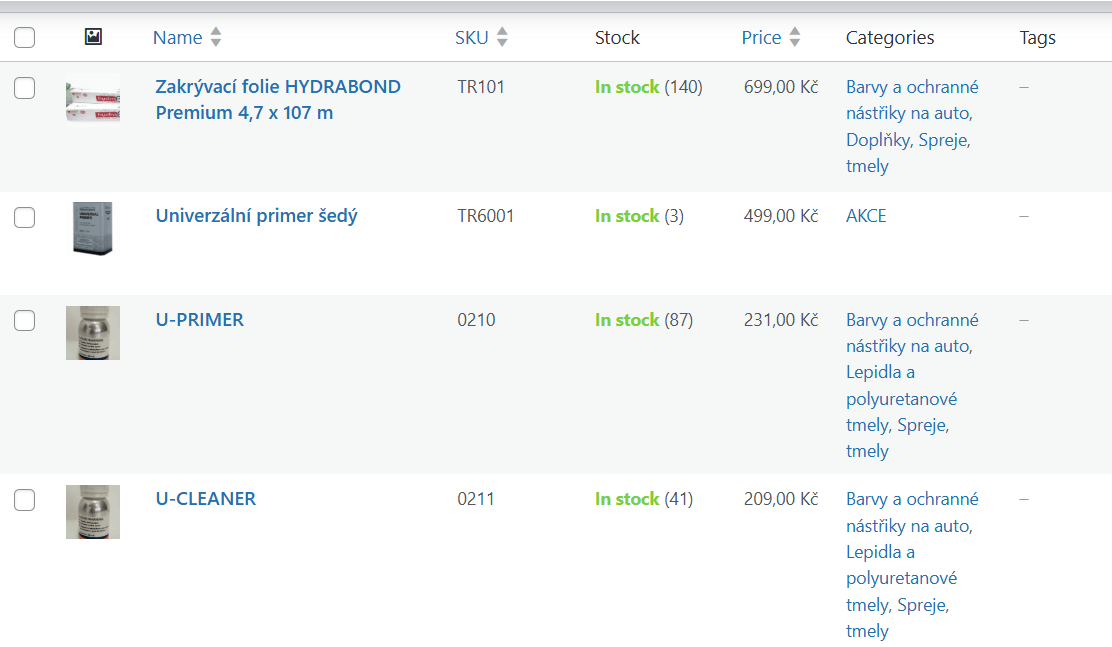
This approach significantly reduces errors, eliminates duplicate work, and allows for quick responses to changes in product range or distribution. At the same time, it creates a solid foundation for further expansion of content, SEO and marketing without increasing operational complexity or management costs as the project grows. Without this consolidation, any further development would mean a multiplication of work, the risk of outdated information and significantly higher operating costs.
Content, automation, and marketing readiness
With this foundation in place, we were able to start addressing content systematically. We created a set of 30 articles describing individual products and situations in which they are appropriate to use. Thanks to content automation, these thirty articles were created in just ten hours. Now, new articles, tutorials, and use cases can be easily created, linked to specific products using smart product boxes, and gradually expanded. The entire system is ready for automation and further scaling without the need to rewrite the basic structure.
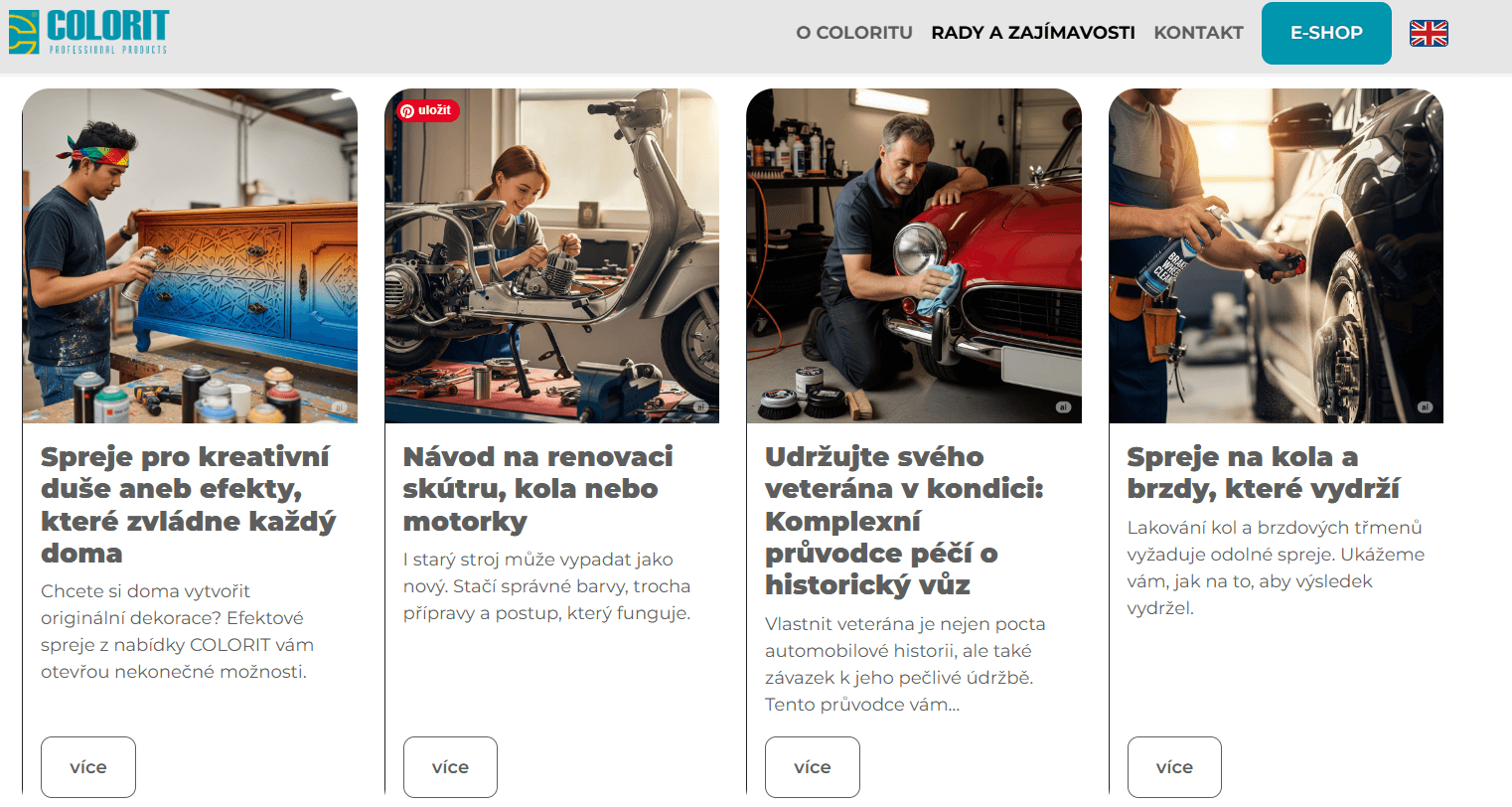
Only at this point does it make sense to build a marketing strategy for individual channels. SEO, paid advertising and other formats do not arise in isolation here, but as part of a single whole, where individual channels support each other and costs are optimised.
The entire process was designed to respect the client's cash flow capabilities without compromising the quality or functionality of the solution. The visual design of the new website was provided by an external designer based on wireframes prepared by us, who was appointed directly by the owner of COLORIT.
New e-shop
The new e-shop was not created as a technological experiment, but as a necessary modernisation of a solution that was at the limits of its capabilities in terms of both functionality and content. COLORIT had long operated its e-shop on the Shoptet platform, which is robust, stable and capable of covering a very wide range of needs – but at the same time, it is based on a flat-rate model, where each additional operation means additional regular costs. The existing e-shop ran on a very old template and did not allow for meaningful content development, a clear category structure, or continuity with the newly built digital vertical.
Based on an initial keyword analysis, we came to a clear conclusion: the problem was not just the design, but the information architecture itself. The original structure, with more than 130 categories, was based on internal logic and the historical development of the product range and did not correspond to how people actually search for products. We therefore proposed a complete reorganisation of the e-shop and a reduction in categories to around 70, based on real search queries, types of use and customer purchasing behaviour. This step was crucial not only for better user orientation, but also for the future SEO performance of the e-shop.
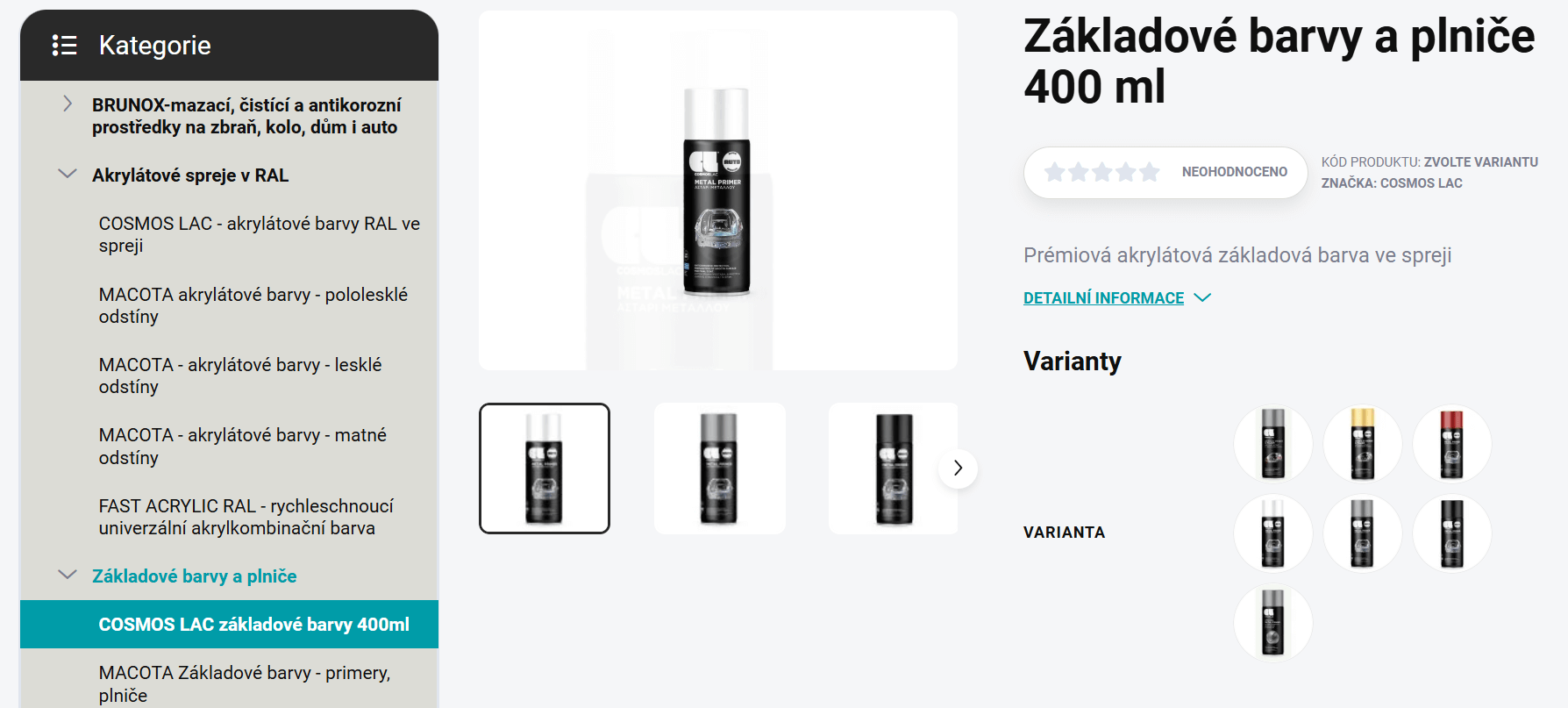
A fundamental limitation of the project was the condition that the e-shop could not be shut down during development. Operations had to run continuously. At the same time, however, it was not possible to carry out such fundamental changes directly on the live version without the risk of outages and a negative impact on sales. Under normal conditions, the parallel development of a new version of the e-shop would have meant operating a second full Shoptet licence and thus additional flat-rate costs. The solution ultimately came from the operator of the new template, who allowed its temporary free use on the second e-shop for a limited period. This made it possible to prepare a completely new version of the e-shop, including the category structure, content and design settings, without interfering with live operations. However, this time-limited space also created significant pressure on the pace of implementation. Each additional month would have meant the need to switch to paid parallel operation and unnecessarily increase the project costs.
The result is a modernised e-shop based on the current template, with a significantly clearer structure, corresponding to how customers actually search for products, and ready for further content and marketing development. At the same time, the entire process was carried out without interrupting sales and without unnecessary additional costs that would have arisen from the long-term parallel operation of two e-shops.
The base document as a management tool
The collaboration also included the creation of a base document comprising approximately 20,000 characters, which was not created "from scratch" but was based on dozens of hours of structured interviews between the account manager and the company owner, prepared analytical questionnaires, and detailed recordings of these consultations. Our business analysts reviewed all of this material, verified key statements, tracked down missing information, and supplemented it with additional market context.
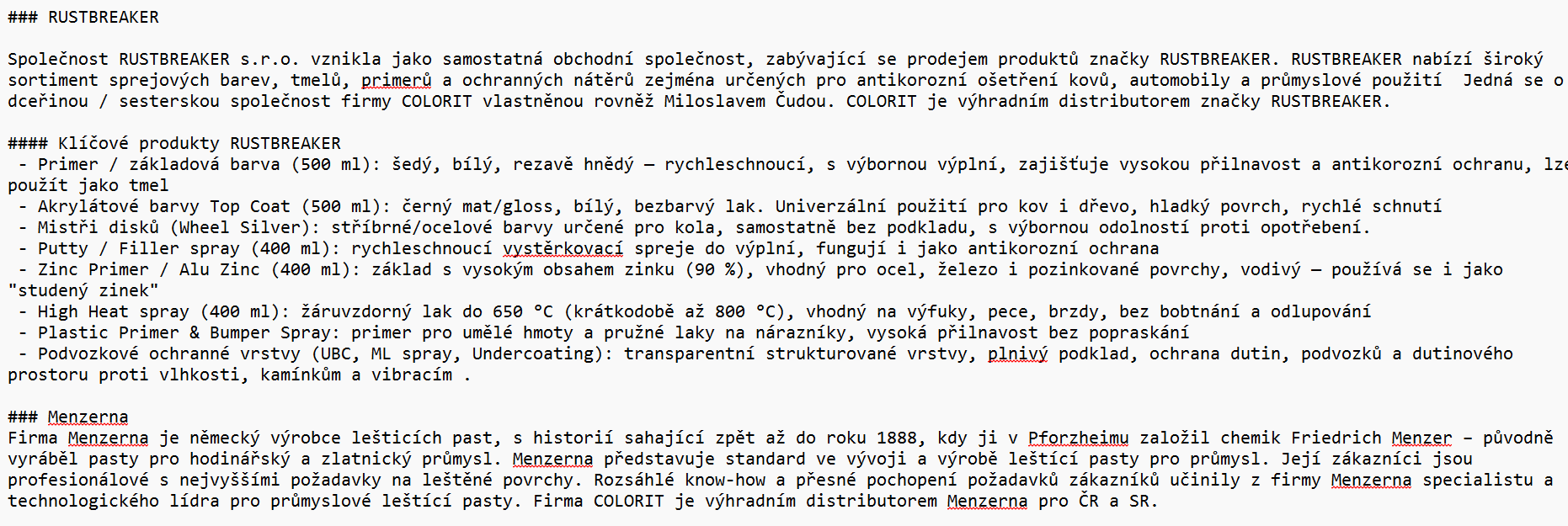
The result is a comprehensive knowledge base about COLORIT – its history, current position, goals, business processes, realistic possibilities, the needs of individual target groups, and the competitive advantages of distributed brands and products. This knowledge was then structured into a single document, which now serves as the basis for all strategic decisions. Thanks to this base document, it was possible to significantly streamline the design of graphics, UX, website structure, content strategy, and development specifications, as all parties involved worked with a single verified and shared source of truth.
Cooperation with COLORIT has led to the creation of a solid digital foundation that connects content, products, data and technology into a single functional whole. Today, the company is ready for systematic growth, e-shop development and effective marketing activities, thanks in part to its strong digital vertical.
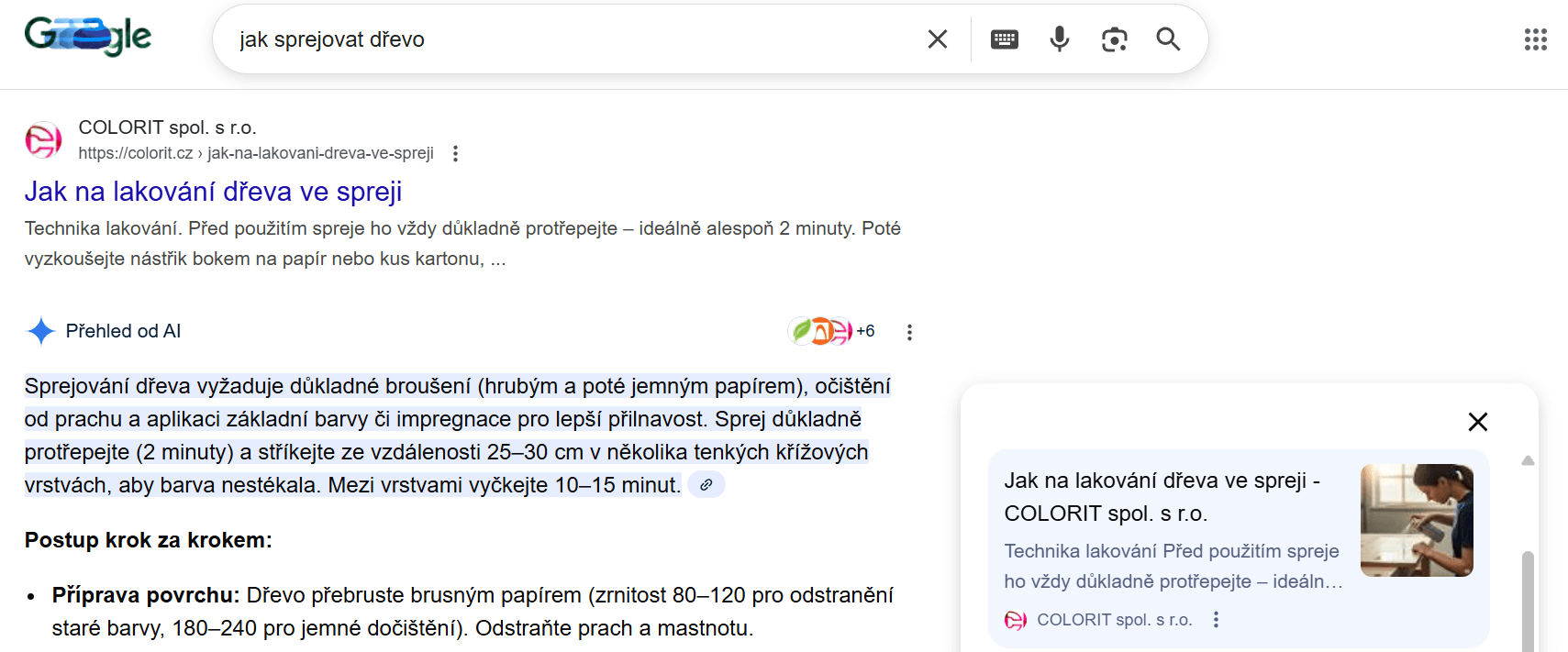
The result of building a digital vertical is a significant shift in the visibility of the COLORIT brand in organic search and AI tools. While at the beginning of the collaboration, the company was practically invisible outside of exact name matches, today its content is displayed not only for queries related to the COLORIT brand, but also for distributed brands, specific product categories, use cases, and technical queries from practice. The content of the websites is also structured in such a way that it can be used by search engines and AI-assisted results, where COLORIT is beginning to appear as a source of expert information. What did not exist before now forms a measurable basis for further growth without dependence on paid advertising.
Do you want to build a digital infrastructure for your business?
Related articles
 Development
Libeřské lahůdky offers its delicacies in 21 shops not only in Prague, but also in České Budějovice, for example, and new branches are regularly...
 Sales
Sales
Saleor is an open platform written in Python that provides a complete backend for creating an e-shop and implements all essential processes,...
Development
The digital world is undergoing a revolution that many have not yet fully appreciated. Two seemingly independent forces are coming together...