How we automated content creation for ACOND
ACOND is one of the leading Czech manufacturers of heat pumps and has been operating on the market since 1998. The development, testing and manufacture of its heat pumps take place at its plant in Milevsko, and in addition to the products themselves, the company also provides after-sales support and other services related to their installation and operation. Despite its strong market position, until recently ACOND faced a challenge that was not directly related to the quality of its products – it possessed considerably more specialist knowledge than it was able to communicate to the public.
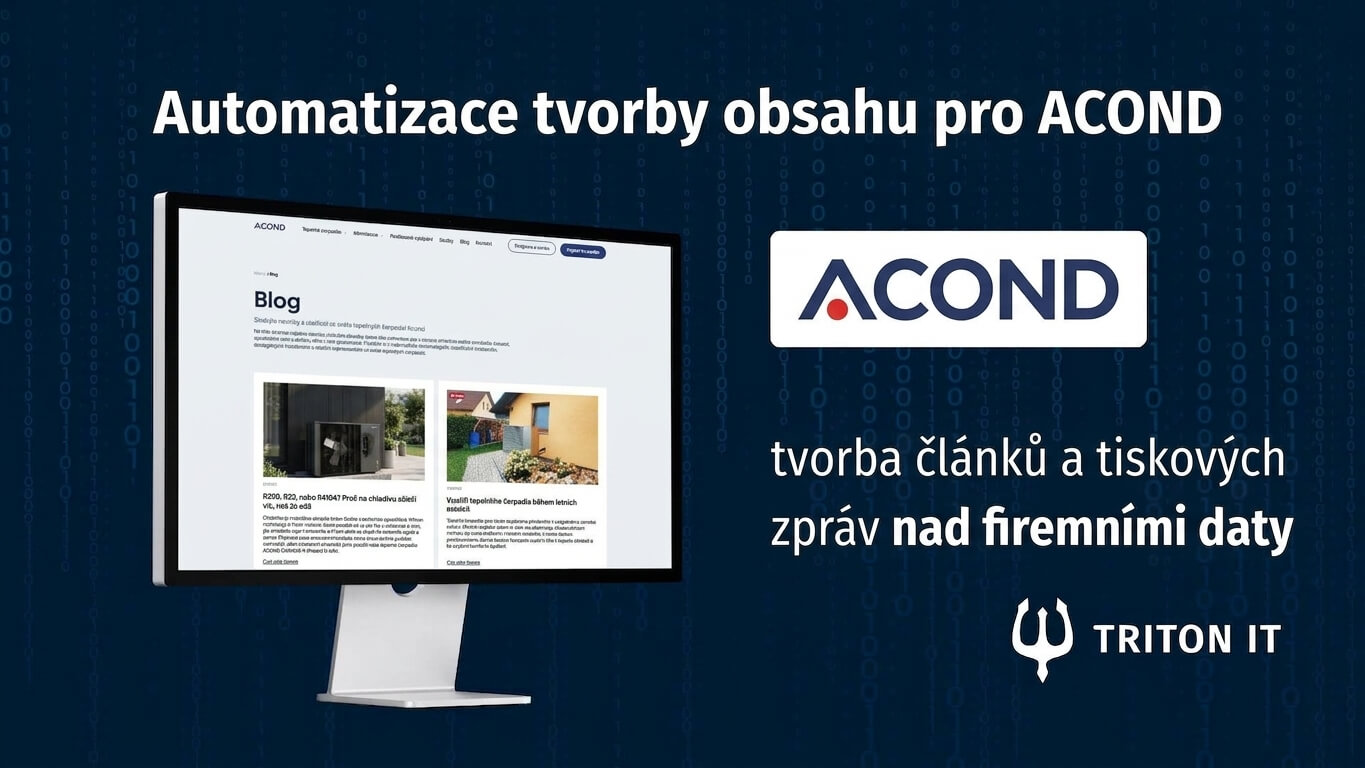
ACOND had produced technical data sheets, manuals, product specifications, internal know-how and other specialist materials. However, there was a lack of systematically developed content that would transform this information into articles, answers to customer queries or materials for the media. This is becoming increasingly important in the age of traditional search engines and generative AI. If a company consistently publishes high-quality, factual content on a particular topic over the long term, it creates a publicly accessible source of information that people, search engines and systems using generative AI can draw on.
We have therefore designed an entire system for ACOND, known as ‘Content Brain’, which is capable of retrieving the company’s know-how, utilising it in content creation, and subsequently checking and validating the result. The outcome is a workflow capable of producing a new specialist article in less than two minutes.
How can we get information to our customers?
At TRITON IT, we work extensively with B2B technology companies. We have noticed that a particular situation often arises in companies that have been developing technical products for a long time. There is a significant amount of knowledge within the company, but only a small proportion of it reaches potential customers. ACOND is a good example. The company had well-developed product materials and technical documentation. This provides a sufficient basis for an engineer, designer or service technician, but not necessarily for someone who types questions into Google or an AI search engine such as ‘How do I choose a heat pump?’, ‘How noisy is a heat pump?’, ‘What is the return on investment for a heat pump?’ or ‘How does a heat pump work in winter?’
It is precisely this type of enquiry that provides a space in which specialist content can be developed over the long term. ACOND already had the answers to many of these questions. They were simply scattered across various documents and had not been published systematically.
The knowledge base as the foundation of the entire automation system
The most common misconception when considering the automation of content creation is that all you need to do is connect ChatGPT or another language model and tell it: ‘Write an article about ACOND heat pumps.’ Whilst the model will generate an article, it may not know which information about ACOND is correct, which is up to date, what the actual specifications of individual products are, or how the company wishes to communicate about its products.
That is why we began building the entire process from a knowledge base. We first populated this with ACOND’s available technical materials – primarily technical data sheets, manuals, product specifications and other documentation. To this, we also added a digitised copy of the book *Atlas of Decarbonisation*, which contains extensive information on the energy sector, decarbonisation and related technologies, including heat pumps.
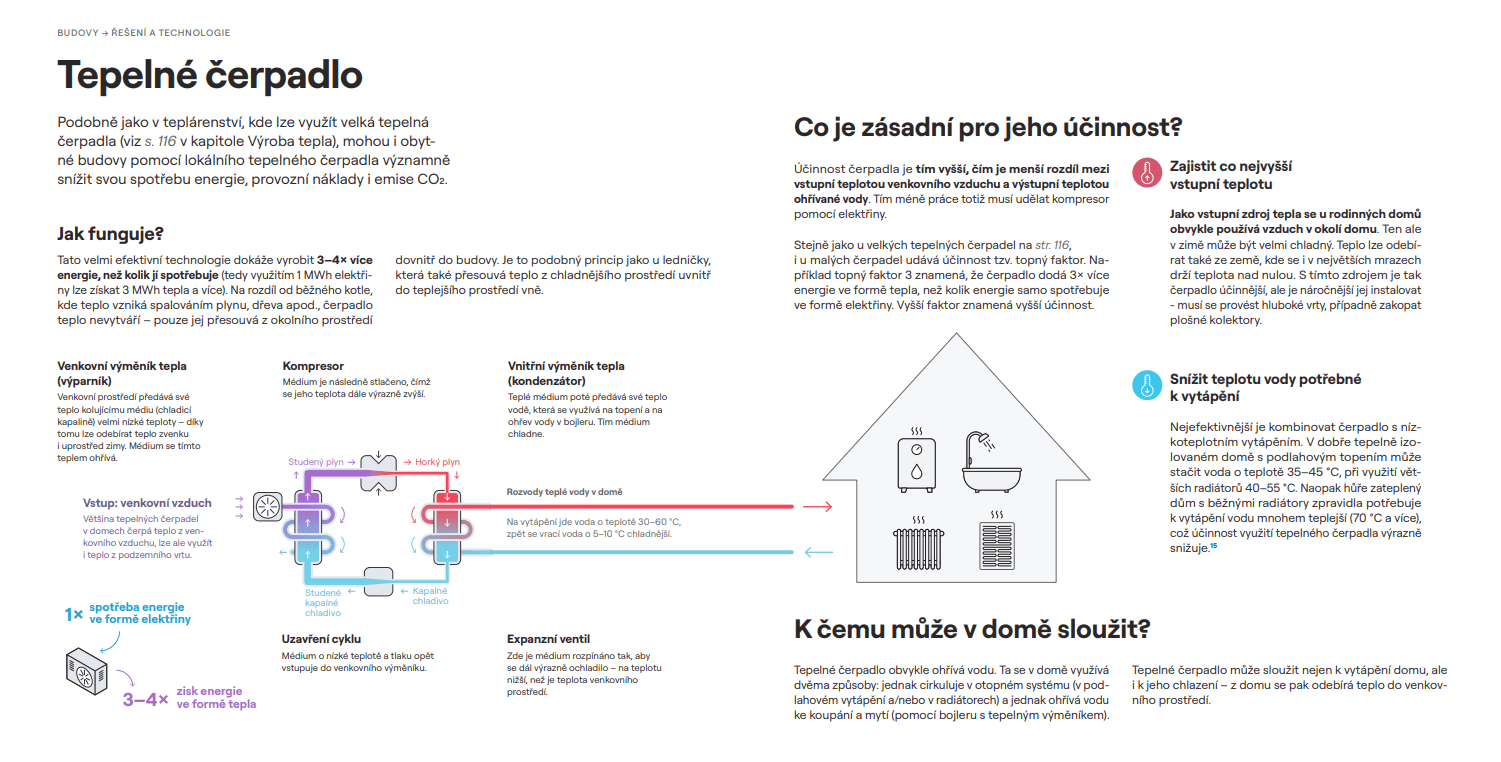
However, some of the source material was difficult to process automatically. Pages containing charts, tables or otherwise structured information, for example, proved particularly challenging, as they lose their meaning during standard document-to-text conversion. We therefore first processed the documents using AI and adapted them into a structure suitable for machine reading. The aim was to obtain a representation of the information that an automated system could subsequently work with. This is a fundamental difference from the standard use of a language model, which is not required to ‘remember’ the information but, when creating a specific article, retrieves relevant material from an extensive knowledge base.
What is a knowledge base?

A knowledge base is a centralised database of information that AI can draw on when creating content. It is not merely a product database. It also contains technical information, explanations, documentation, in-house know-how and other resources designed to enable the system to answer questions based on specific and validated sources.
This is a fundamental difference from the standard use of a language model. The model is not required to ‘remember’ information. When creating a specific article, it retrieves relevant information from an extensive knowledge base.
AI first searches for information, then writes
From a technological perspective, the RAG (Retrieval-Augmented Generation) principle is a key component of the solution. The basic idea is simple: rather than the language model generating a response solely on the basis of what it has learnt during training, it retrieves relevant information from an external knowledge base before generating the response.
So, if the workflow is given the task “Write an article on the noise levels of ACOND heat pumps”, we do not need to manually enter the full product documentation into the prompt. The system first searches the knowledge base for relevant sections. For example, it may find information on specific models, their acoustic parameters, measurement methods and other related documentation. It then passes this information to the agent, who will draft the article.
What is RAG?

RAG (Retrieval-Augmented Generation) is an approach to AI in which, before generating a response, the model retrieves relevant information from an external database or knowledge base. This means the model does not have to rely solely on its general knowledge.
In practice, this means that the more specialist material there is in the knowledge base, the less information a person has to enter manually for each new task.
A knowledge base saves time by eliminating the need to write long prompts
Without our Content Brain, the process of creating a high-quality specialist article involves a person having to provide the AI with the following each time:
- information about ACOND,
- information about a specific product,
- technical specifications,
- background material on the subject,
- the required style of communication,
- target group,
- the structure of the article,
- a list of essential information,
- and further instructions.
Such a prompt can be enormous and becomes impractical when there is a large amount of content. In our workflow, this information is divided into two basic layers. The knowledge base contains information about the world the system is supposed to write about. The system instructions for the agents define how it should write about it. For example, if a technical parameter of a product changes, there is no need to rewrite the prompt for every article. The source information in the knowledge base is updated, and subsequent generation can then work with the new data.
The workflow consists of several agents
The entire workflow is built on the n8n platform, which serves to orchestrate the individual steps. n8n integrates the knowledge base, AI models, database and communication interfaces into a single process. To work with the knowledge base, we use Ragflow, which processes documents and subsequently enables us to search for relevant information based on semantic similarity, rather than just exact word matches. This is important, for example, when a query concerns the efficiency of heat pumps in winter, whilst the source documents use terms such as COP, energy consumption or operating modes. The workflow is thus able to link semantically related information, even if it is not phrased in exactly the same words.
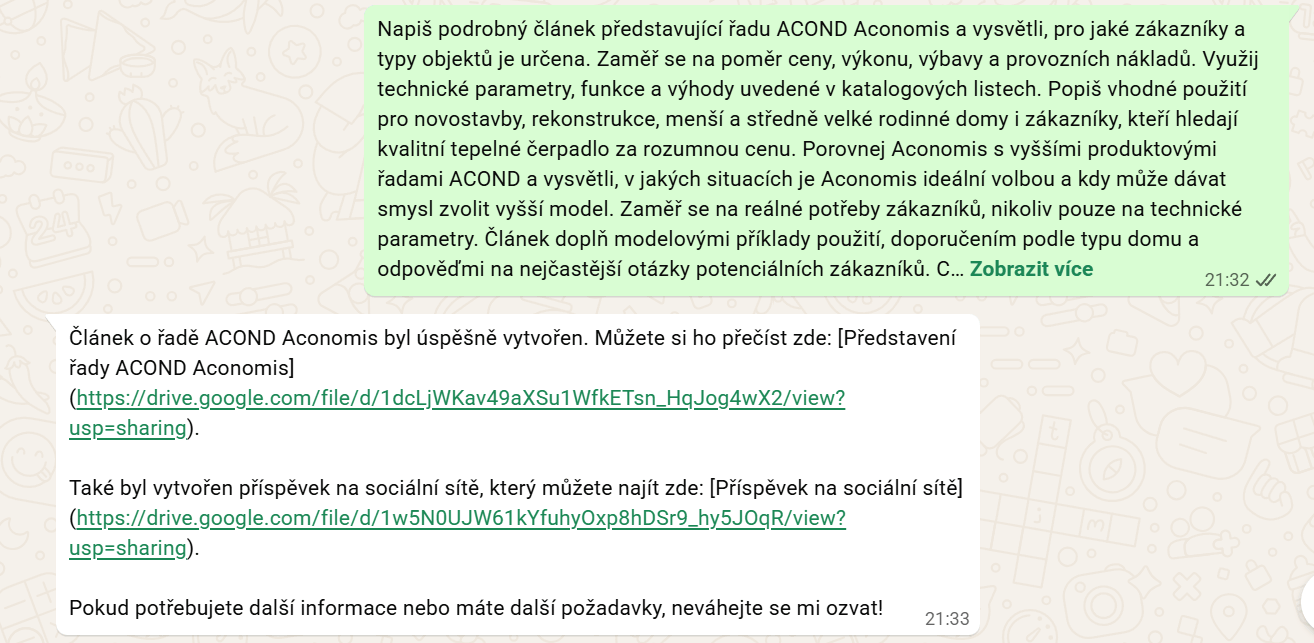
The whole process can be managed easily via WhatsApp or email. This means the user does not need to work directly with n8n, Ragflow or individual AI models. For example, all they need to do is send a request such as ‘Create an article about the noise levels of ACOND heat pumps, focusing on the differences between the individual models’. The workflow accepts the request, processes it, searches for relevant information in the knowledge base, forwards it to the appropriate agents and then returns the finished output. If it cannot find the information needed for processing in internal sources, it can also use public internet sources in accordance with predefined rules. This sets it apart from the typical use of generative AI: the user does not interact with a single chatbot, but instead triggers an entire chain of automated processes via a simple interface.
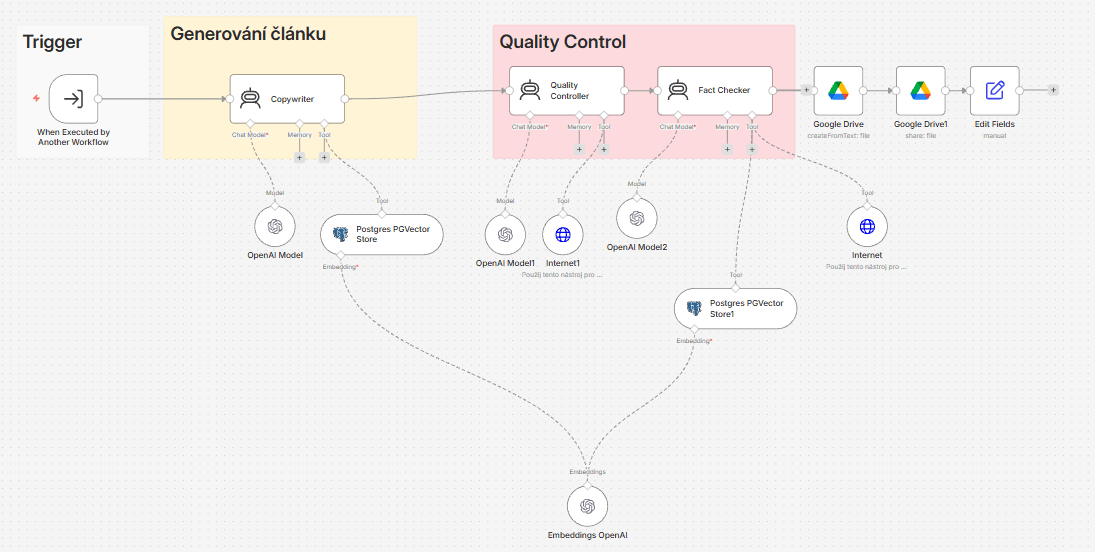
Another key aspect of the solution is that the workflow is not based on a single AI agent to which we simply input a topic and then wait for the finished text. We utilised our tried-and-tested content creation agents, which we use both internally and for other clients, and adapted them to ACOND’s requirements.
For example, the content creation agent has system instructions setting out how ACOND should communicate, what tone of voice it should use, how to handle specialist information, and how to structure the final text. This means that when a new topic is assigned, there is no need to explain again what ACOND is, who it is communicating with, and how it should present itself.
The result is a more consistent output. An article about a specific heat pump model, a general educational text on heating and a press release can all be produced within a single automated environment whilst still adhering to the same basic communication guidelines.
However, the automation of content creation cannot simply rely on a single model generating text that is then sent for publication. For a specialist manufacturer, the risk of error is significantly greater than for general lifestyle content. An incorrect specification of performance, noise levels, refrigerant type or any other technical parameter can alter the meaning of the entire article. That is why a Quality Control agent is also part of the workflow.
This person receives the draft article and carries out an initial check of the information it contains. They compare it with the available source material and look for, for example, inconsistencies, inaccuracies or information not supported by the knowledge base. This does not, of course, mean that automated checking replaces the expert. For sensitive technical information, human oversight is still necessary, but automation significantly reduces the amount of work a person has to do on each article.
Another benefit is that the system we have created is not limited to the blog alone. At ACOND, we have also used this workflow to produce general press releases, which we then distribute to the media via ČTK, and to create posts for social media platforms such as Facebook, Instagram and LinkedIn.
Instead of units of hours worked, use less than two minutes
The most noticeable change is the speed. Before the workflow was set up, when preparing each article, one had to carry out research, track down source material, work with product documentation and actually write the text.
Now, once a topic has been entered, the workflow automatically carries out the necessary steps, from gathering relevant information through to generating the text and performing an initial check. The actual creation of an article now takes less than two minutes. As a result, ACOND is no longer constrained by the time required to produce each article and can publish a large volume of content across various channels.
In this case, the content strategy has another dimension. If a company does not have publicly available information on a particular topic, a search engine or AI system has less data to draw on when processing a query and is less likely to perceive the brand as an ‘authority’.
Conversely, if a company publishes specialist content over the long term, a more extensive information layer develops around its website. This can address the questions users are seeking answers to, whilst also explaining the relationship between the company, its products and specific topics. The aim is to create a sufficiently high-quality and consistent public information footprint, thanks to which the brand is better represented in the topics in which it has genuine expertise.
TRITON IT has helped us to significantly simplify and speed up the creation of specialist content. Thanks to Content Brain, we are able to utilise our technical know-how across articles, press releases and social media, without having to laboriously search for source material all over again for every piece of content. I particularly appreciate TRITON IT’s practical approach and the fact that the result is not just an AI tool, but a fully functional process that genuinely saves us time.
During the first three months of live operation, we used the workflow to produce 12 specialist articles and 3 press releases, which we distributed via ČTK and which were picked up by dozens of media outlets. The knowledge base utilises hundreds of pages of product and technical documentation, and it now takes less than two minutes to create a new article, from the initial request to the final output. Over the first three months, this automation saved nearly 50 hours of human labour. And the results are already evident in the data: organic traffic to the ACOND website has increased by almost 15 per cent.
Want to start automating content creation?
Related articles
 About us
How is artificial intelligence used in video production? What are MCP servers and how do they help developers? And what if you could control...
 Advices and tips
Search advertising has long been based on the principle whereby a user enters a query and the advertising system attempts to find offers that...
 Content
Many products and services are based primarily on rational decision-making. Customers do not choose them on impulse, but based on price, specifications,...